

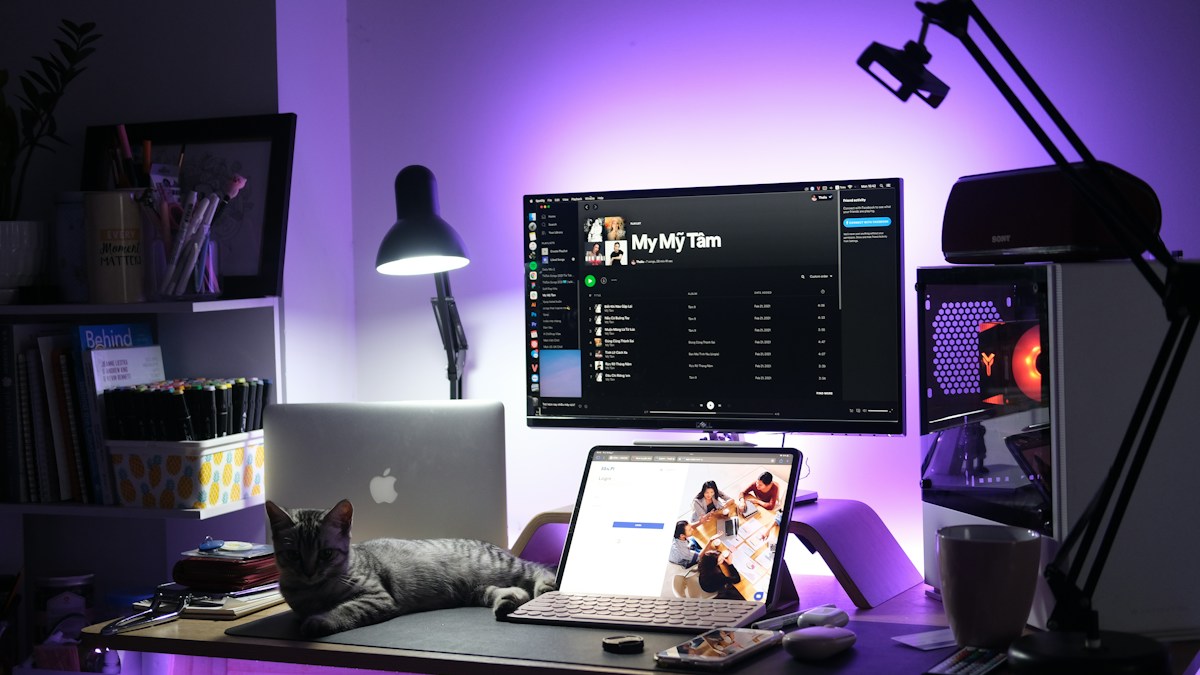
Melanopsin suppression, circadian productivity, and transitioning from 6500K focus light to 2700K evening warmth.
The Biology of Melanopsin Retinal Ganglion Cells
Human circadian biology is regulated by intrinsically photosensitive retinal ganglion cells (ipRGCs) in the eye that contain the photopigment melanopsin. Melanopsin is hyper-sensitive to 460nm to 490nm high-frequency blue-white light (5000K to 6500K). When exposed to cool blue-white light during morning hours, melanopsin signals the pineal gland to suppress melatonin production, maximizing alertness, cognitive reaction time, and daytime focus.
The Evening Sleep Hazard: Why Warm 2700K Light is Mandatory at Night
Working under bright, cool-white 5000K office lighting past sunset tricks your biological clock into believing it is midday solar noon, delaying natural melatonin secretion by up to 2 hours and disrupting deep REM sleep architecture. Desk task lighting must transition to warm amber tones (2700K to 3000K) after dusk to allow your brain to prepare for natural sleep cycles.
Color Rendering Index (CRI Ra): The Secret to Vivid True Colors
Cheap LED light bars use low-grade diodes with a Color Rendering Index (CRI) below 80, casting a dull, greenish-grey tint that distorts paper documents and causes eye fatigue. High-end light bars boast CRI Ra > 95, rendering printed ink, sketches, and skin tones with the vivid fidelity of natural morning sunlight.
Technical Specifications & Reference Matrix
| Time of Day | Target Color Temperature | Biological Impact | Recommended Task Lux |
|---|---|---|---|
| Morning (8:00 AM – 12:00 PM) | 5500K – 6500K (Cool White) | Suppresses melatonin / High Alertness | 500 – 700 Lux |
| Afternoon (12:00 PM – 5:00 PM) | 4000K – 4500K (Neutral White) | Sustained cognitive focus | 500 Lux (Standard office) |
| Early Evening (5:00 PM – 8:00 PM) | 3200K – 3500K (Warm Neutral) | Gentle transition / Eases eye strain | 350 – 450 Lux |
| Late Night Work (Post 8:00 PM) | 2700K (Deep Warm Amber) | Promotes melatonin / Preserves sleep | 200 – 300 Lux (Soft) |
💡 Expert Field Recommendation
Look for light bars featuring an auto-dimming ambient sensor that dynamically adjusts both brightness and color temperature throughout the day based on changing room lighting conditions.
Diagnostic Troubleshooting Checklist
- Colors on printed proofs look dull under light bar: Low Color Rendering Index. Upgrade to a light bar certified for CRI Ra ≥ 95 with high R9 red spectrum rendering.
Frequently Asked Questions
What does “Lux” measure compared to “Lumens”?
Lumens measure the total light output emitted by the LED source in all directions. Lux measures the intensity of light that actually reaches a specific work surface (1 Lux = 1 Lumen per square meter). High-quality desk lighting targets 500 Lux on your desktop.
Article researched and verified by Arlo Chen, dedicated technical specialist and editorial contributor.